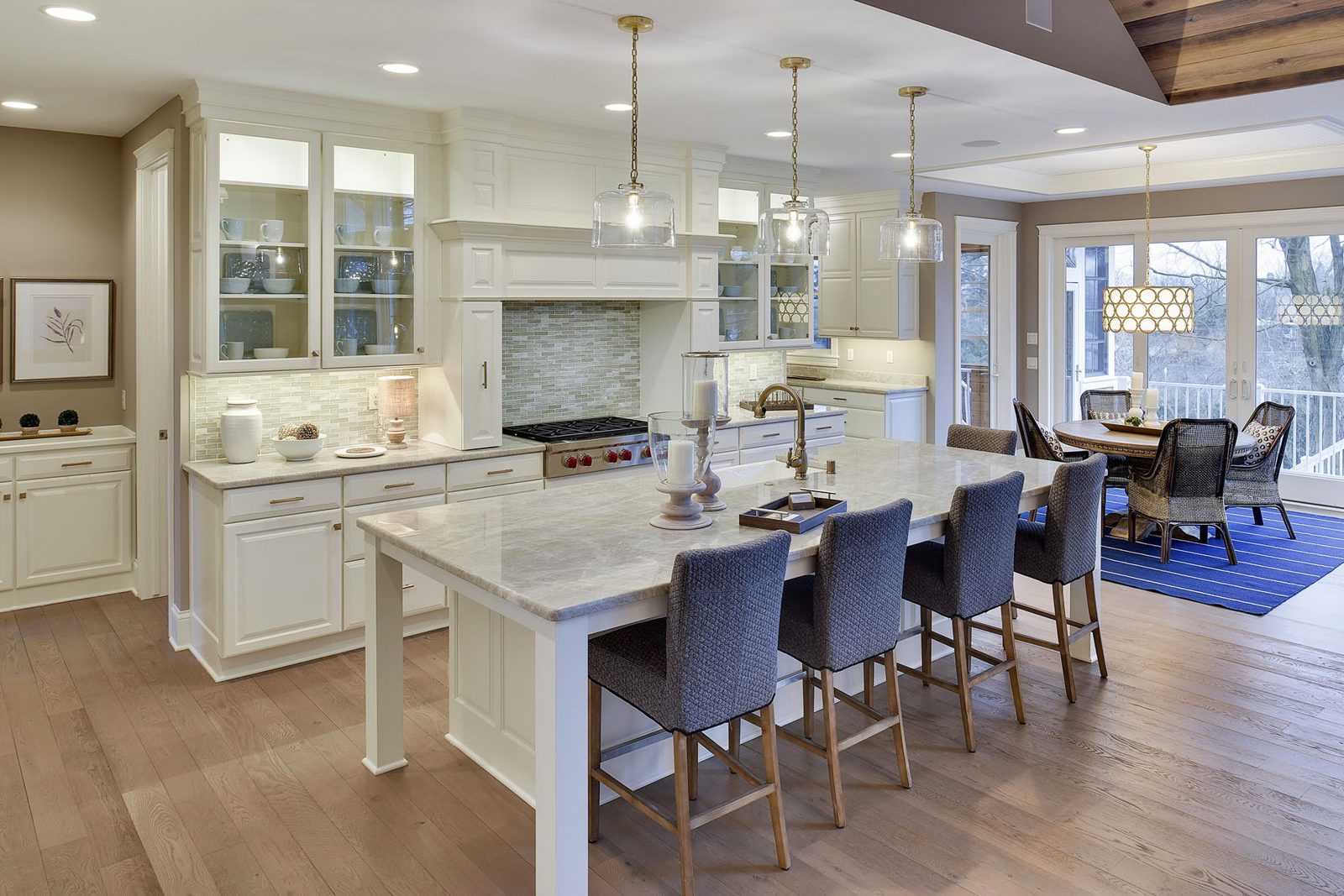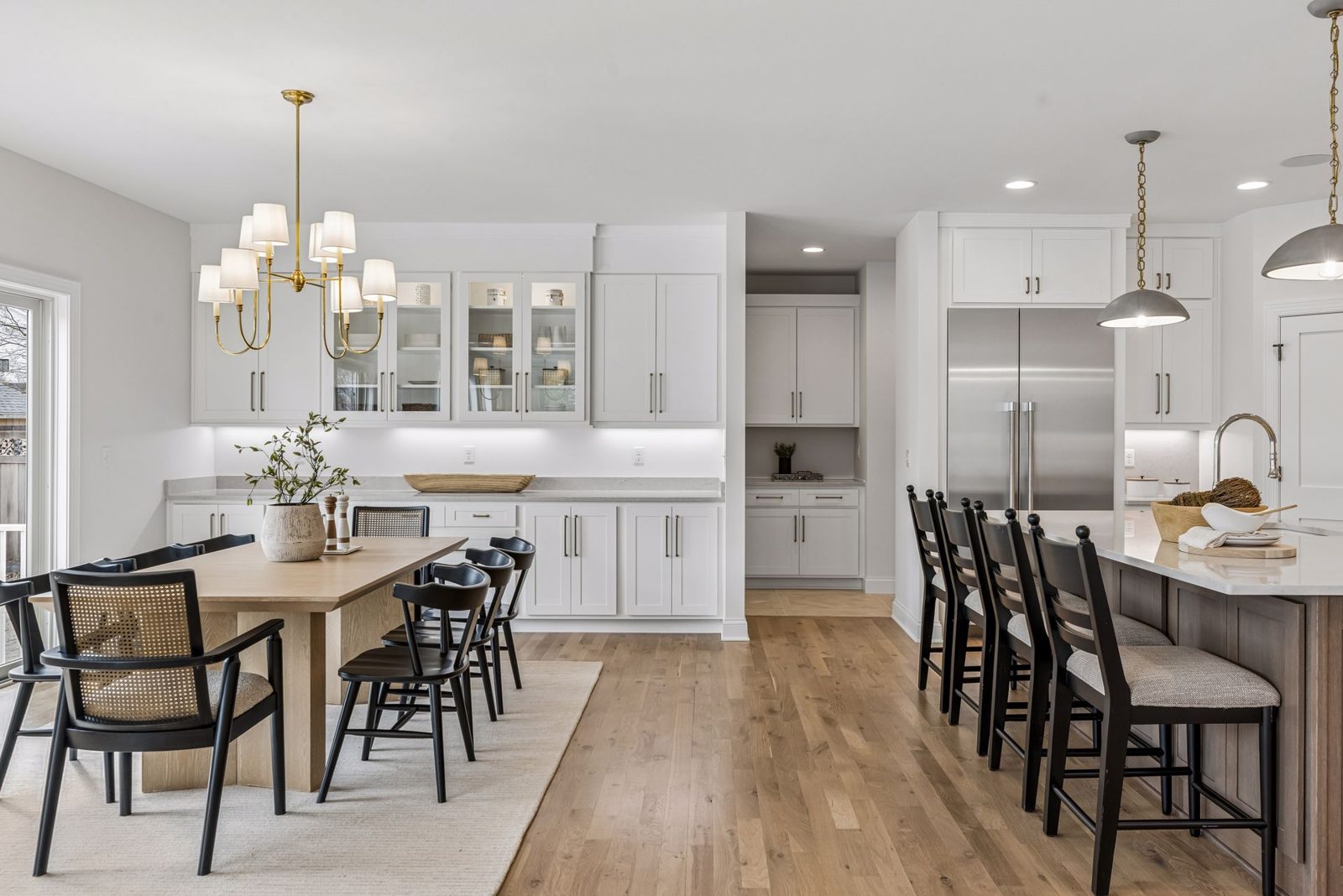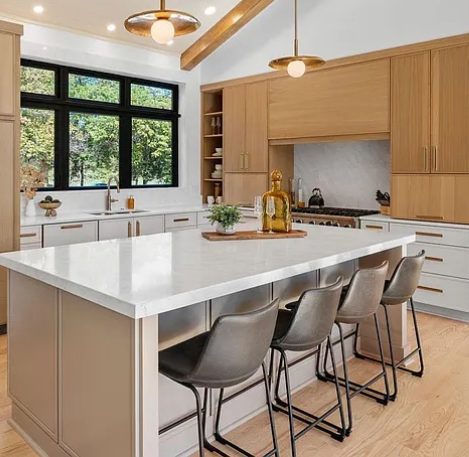
Quartz is priced by the slab and quoted by the project — the color's tier, the thickness, how much slab your layout consumes, the edge, the cutouts and the seams. Here is exactly what moves the number, and where it can come down.
Quartz countertops in the Twin Cities are priced by the slab and quoted by the project, not by a flat rate per square foot. What sets the number is the color's price tier, the thickness (2 cm or 3 cm), how much of a slab your layout actually consumes once seams and grain direction are planned, the edge profile, the sink and cooktop cutouts, and whether a remnant can cover the job. Two kitchens with the same footage can land far apart for those reasons, which is why an honest answer starts with a drawing.
The fastest way to a real figure is our quote page: send a sketch with dimensions and the colors you like and we price the actual layout. The rest of this guide explains what you are paying for, so the quote makes sense when it arrives.
What moves the price
- Color tier. Every quartz line groups its colors into price levels. Plain whites and subtle grays sit in the entry levels; dramatic marble-look veining, book-matched patterns and specialty finishes sit higher.
- Thickness. 3 cm is the standard for kitchens and reads substantial at the edge; 2 cm is lighter and often a little less, and needs a built-up edge or plywood support in some spots.
- Slab yield. A slab is a fixed size (most quartz around 63 by 128 inches; jumbo slabs larger). An L-shaped kitchen that almost fits one slab but needs a second one for the last piece costs materially more than one that fits — that is where a clever layout or a remnant saves real money.
- Edge profile. Eased and straight edges are standard; ogee, bullnose and mitered build-ups add fabrication time per linear foot.
- Cutouts and seams. Each sink or cooktop cutout, faucet hole and seam is machine and hand work. An undermount sink also needs a polished cutout edge.
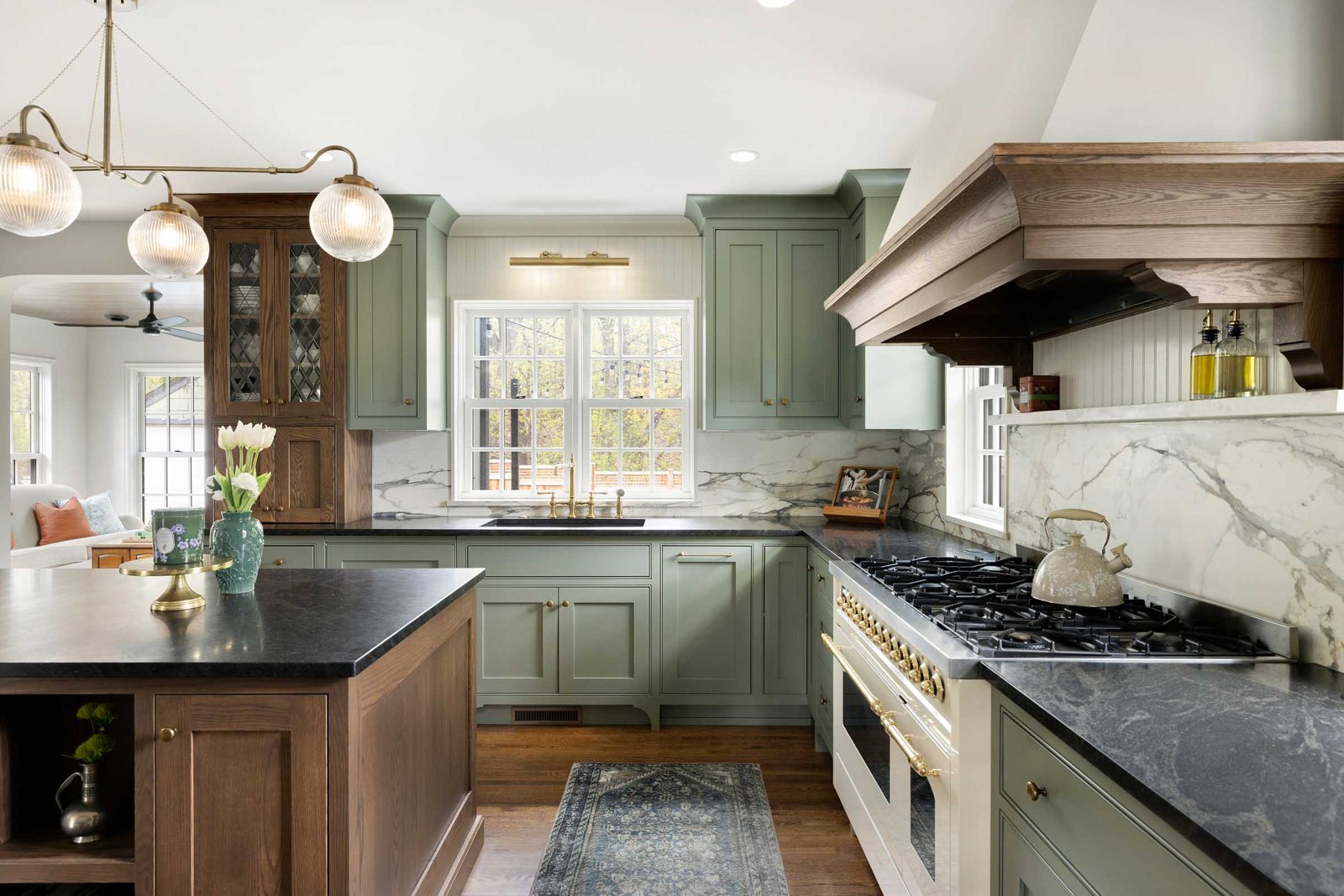
- Backsplash. A 4-inch splash, a full-height slab backsplash behind the range, or tile by someone else — each is a different line on the quote.
- Tear-out and disposal of the old top, and re-hooking the plumbing, are separate trades or separate lines depending on the job.
Where the price comes down
- Remnants. Our inventory page lists every remnant on the rack, live. Vanities, bars, laundry rooms and small islands are often a remnant away from a much smaller number.
- Entry-level colors in a premium line still carry the line's warranty and consistency — the tier is about the look, not the quality.
- A standard eased edge and a 4-inch splash keep fabrication time down.
- Simplify the layout. Fewer seams and one slab beat an extra slab bought for a small return.
Getting a real number
Send a sketch or drawing with overall dimensions, the colors you are considering (two or three is fine) and the sink you plan to use, or draw the layout in our online studio for a starting estimate. Final pricing follows a field measurement once cabinets are set, and covers material, fabrication, edges, cutouts, backsplash and installation on one quote.